– On a motorcycle through Bhutan, the Land of the Thunder Dragon
Photo reportage
Text and photos by Villads Kok Mortensen
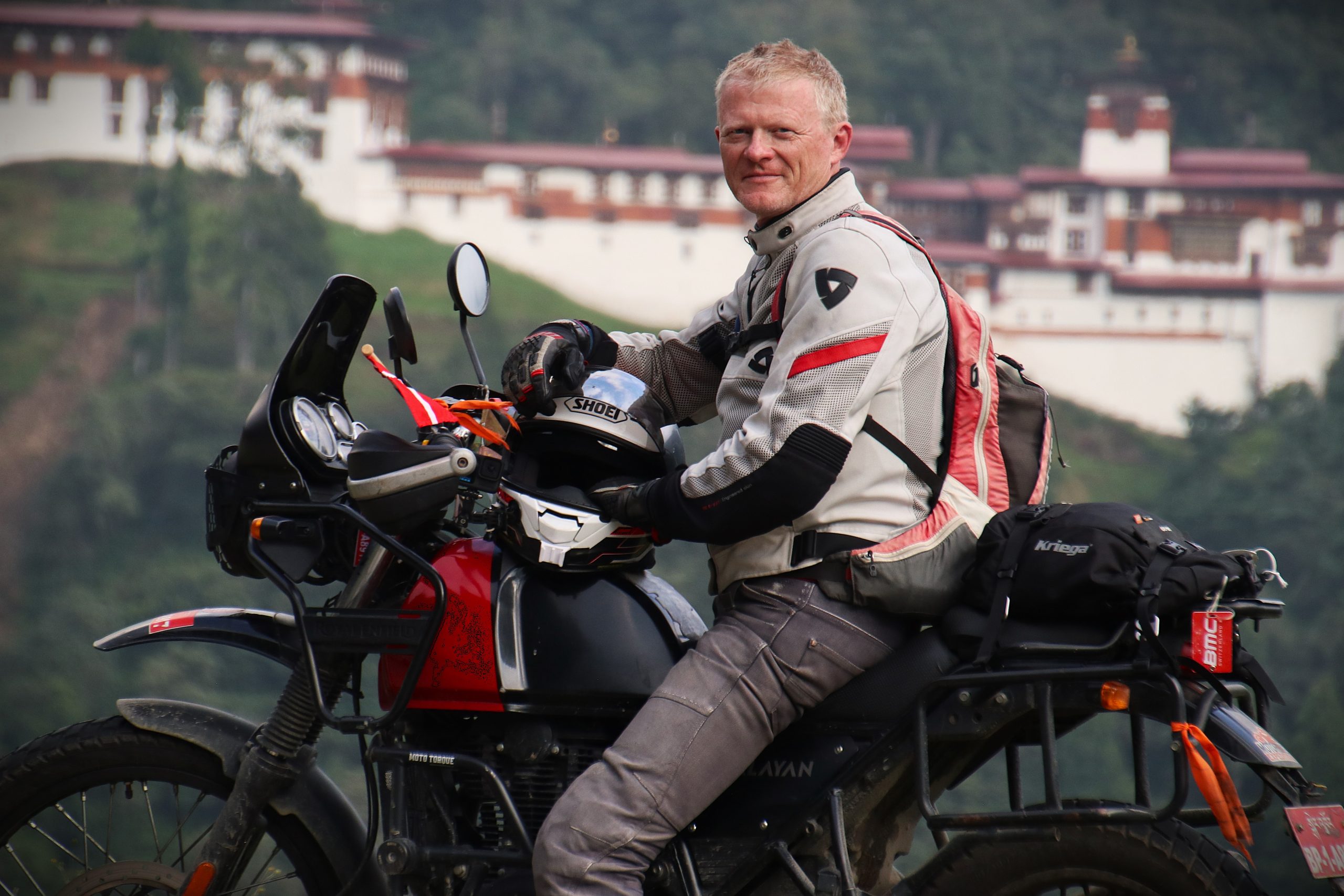
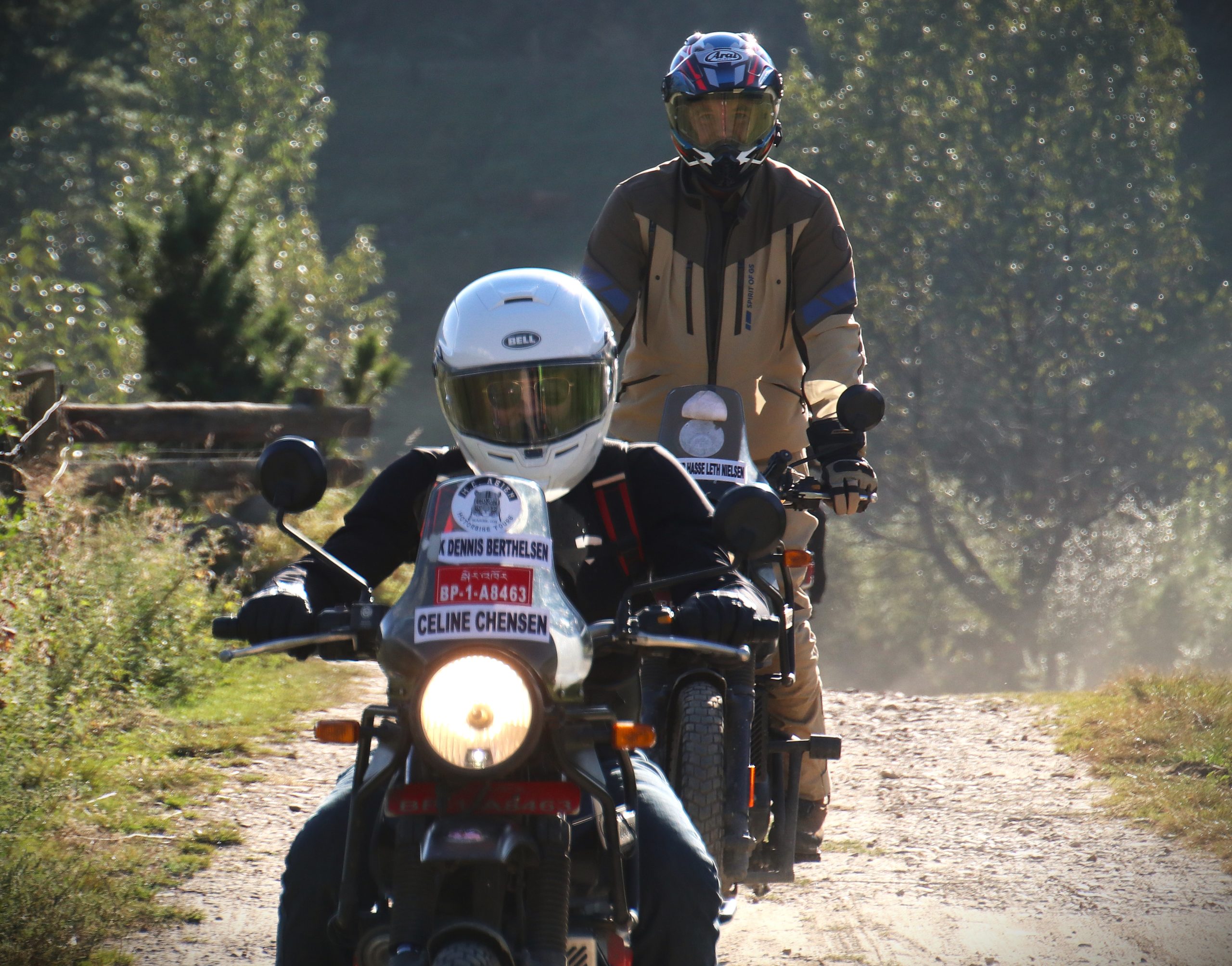
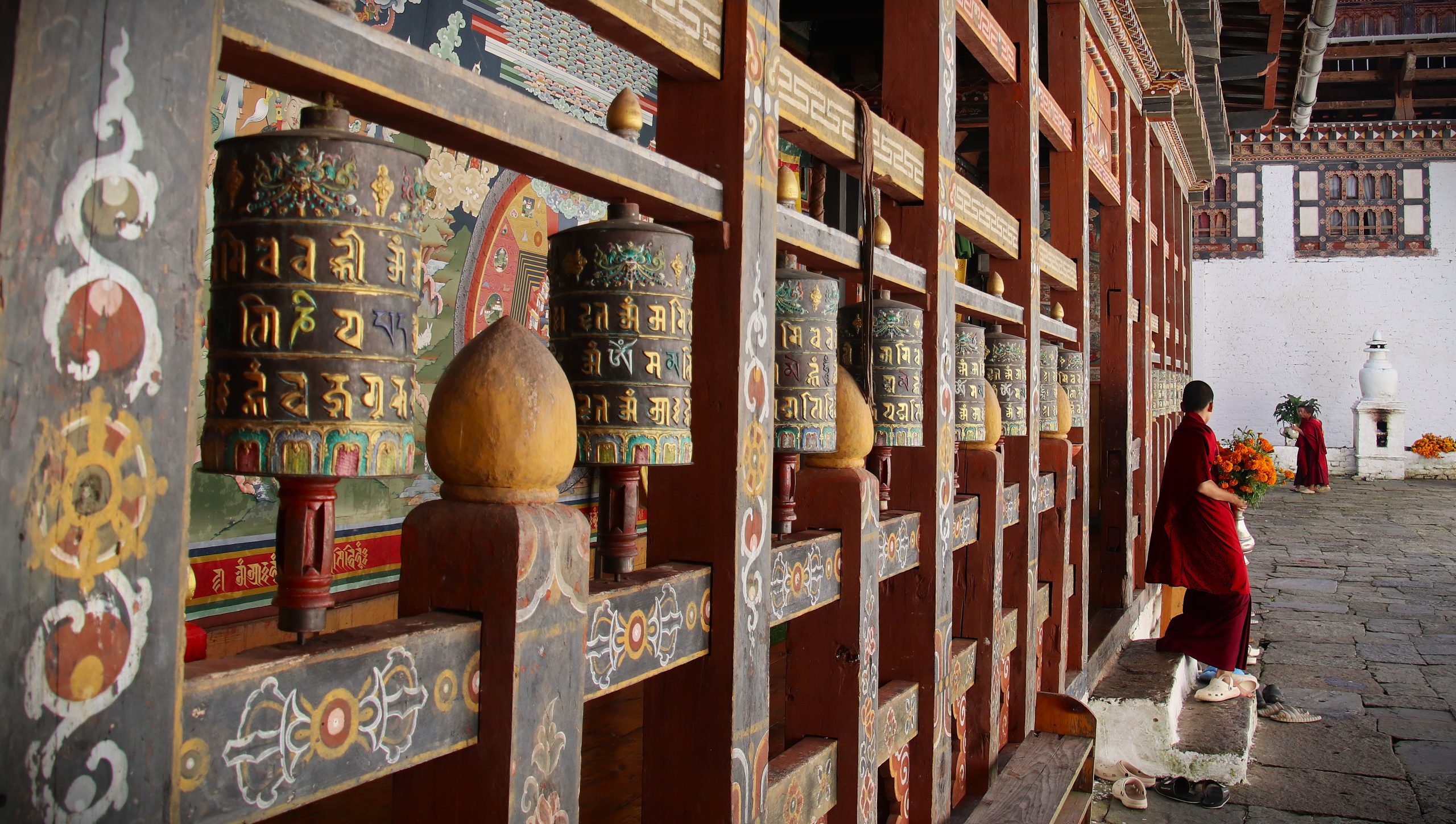
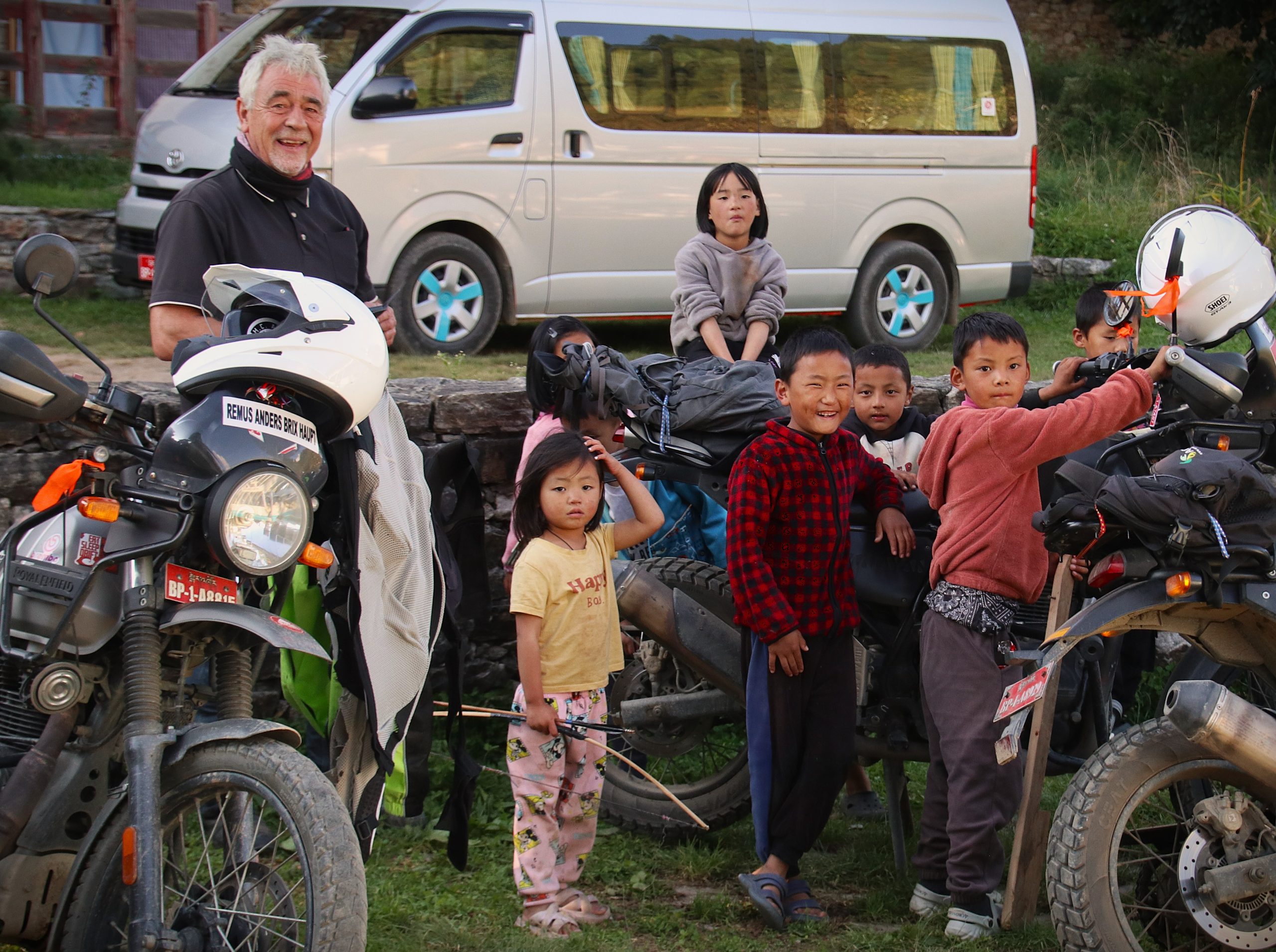
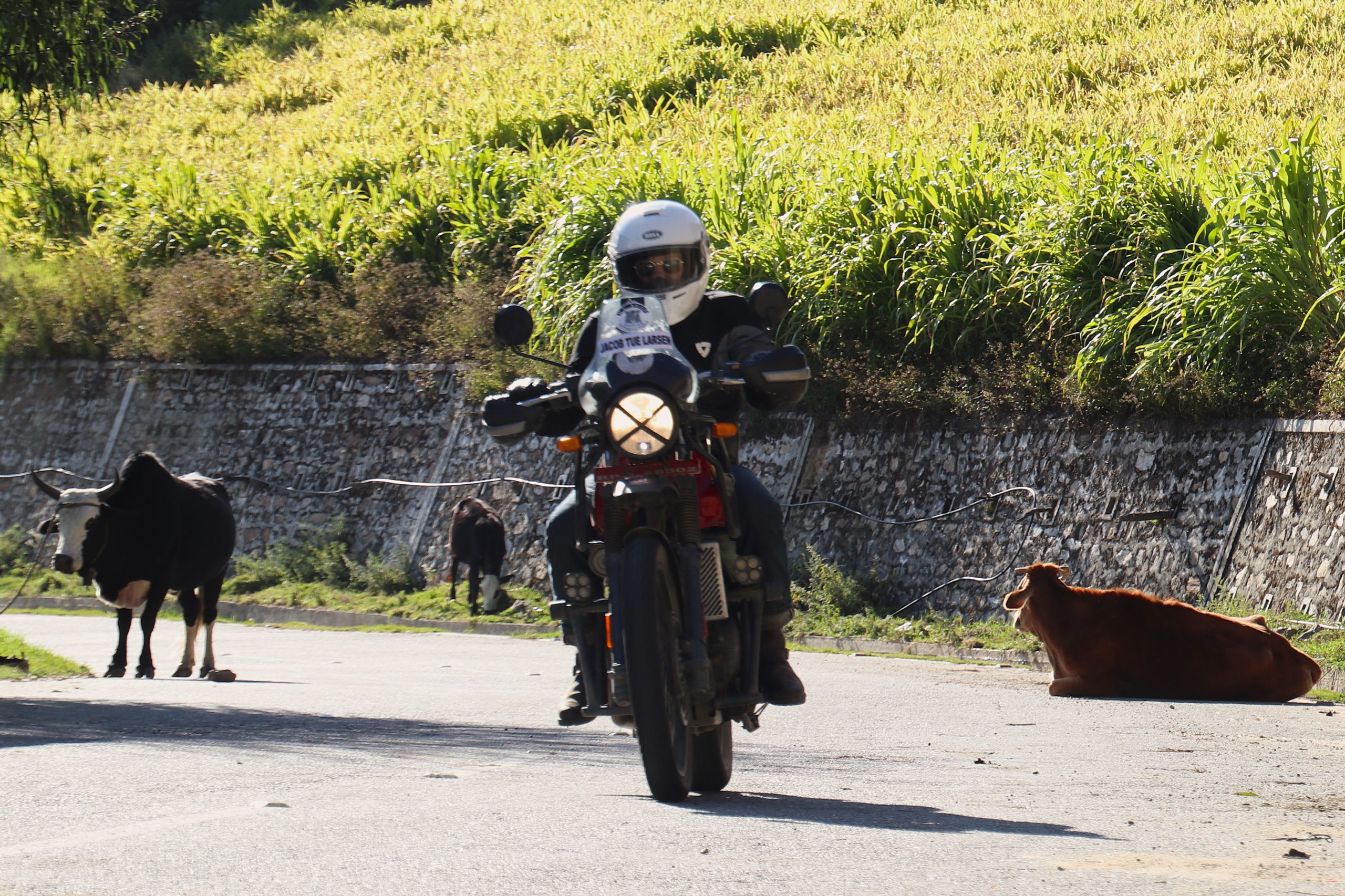
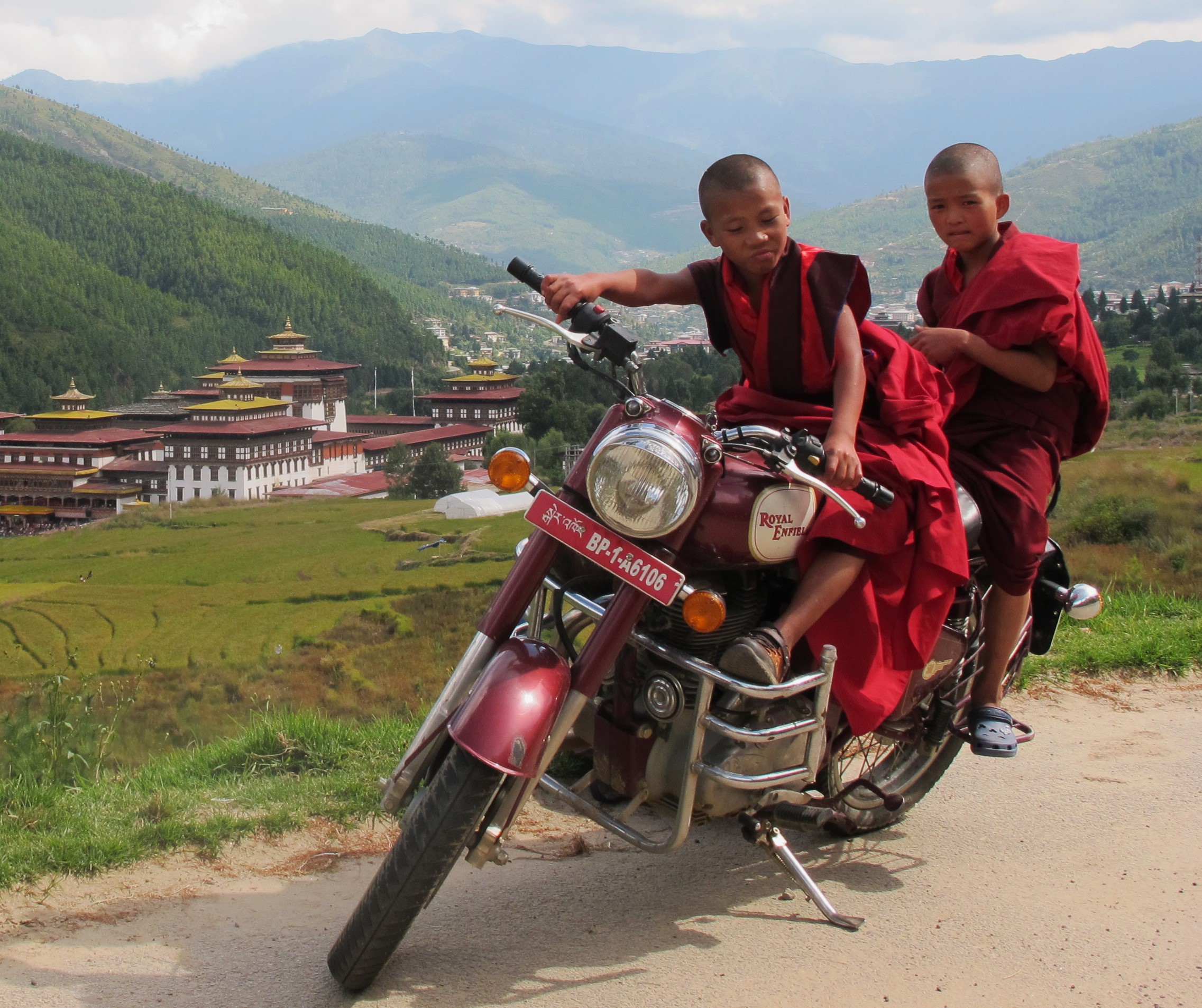
We turn the keys and listen to the deep sound from our Royal Enfield motorcycles. The sound blends with the wind and distant, tinkling bells from a Buddhist temple. In front of us lies Bhutan, a small kingdom squeezed between the giants of India and China, hidden in the folds of the Himalayas, surrounded by myths and magic. A kingdom surrounded by the white peaks of the Himalayas, covered in eternal snow. Narrowed country roads with countless turns and mountain passes at many thousands of meters of altitude await ahead.
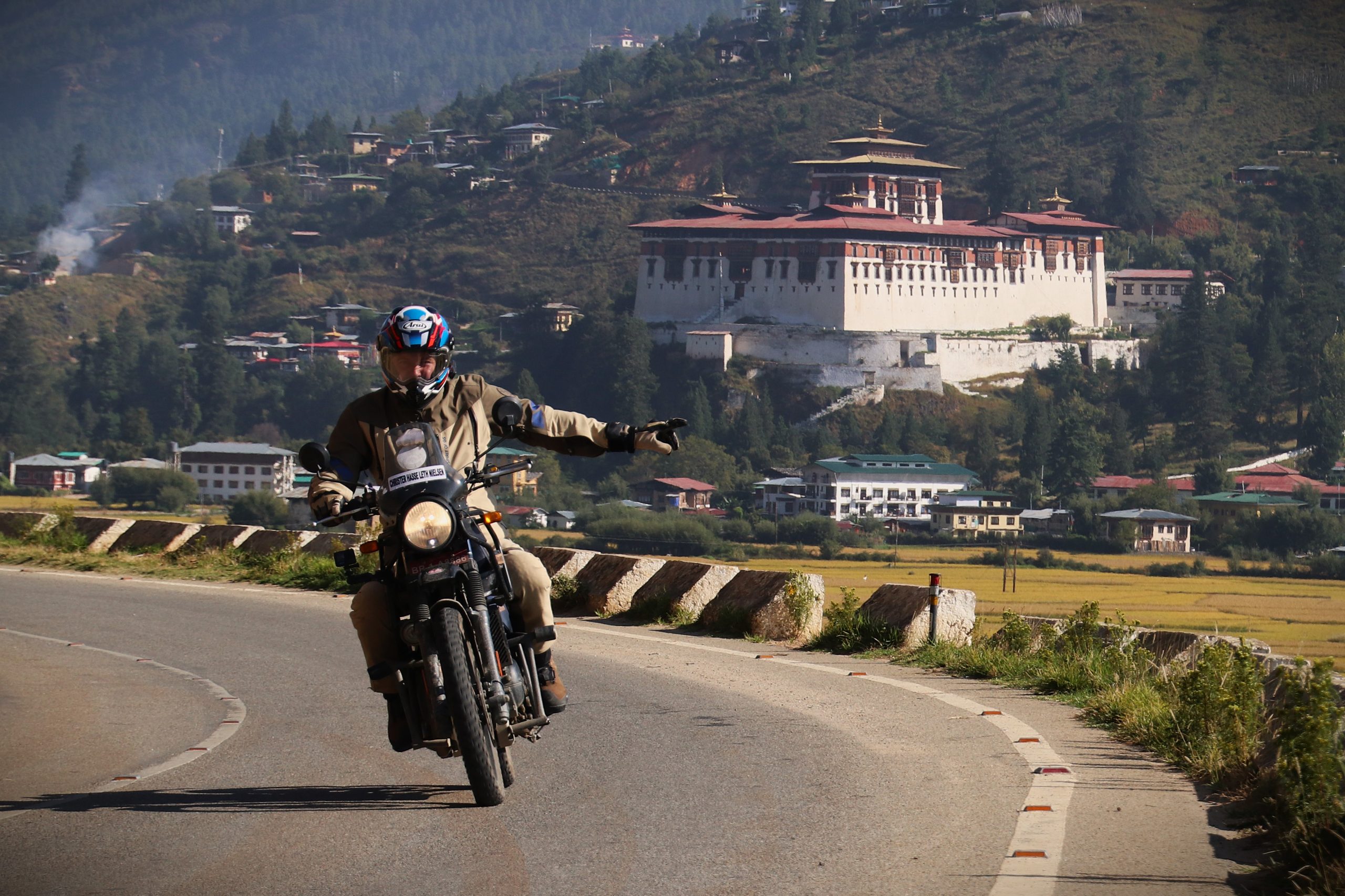
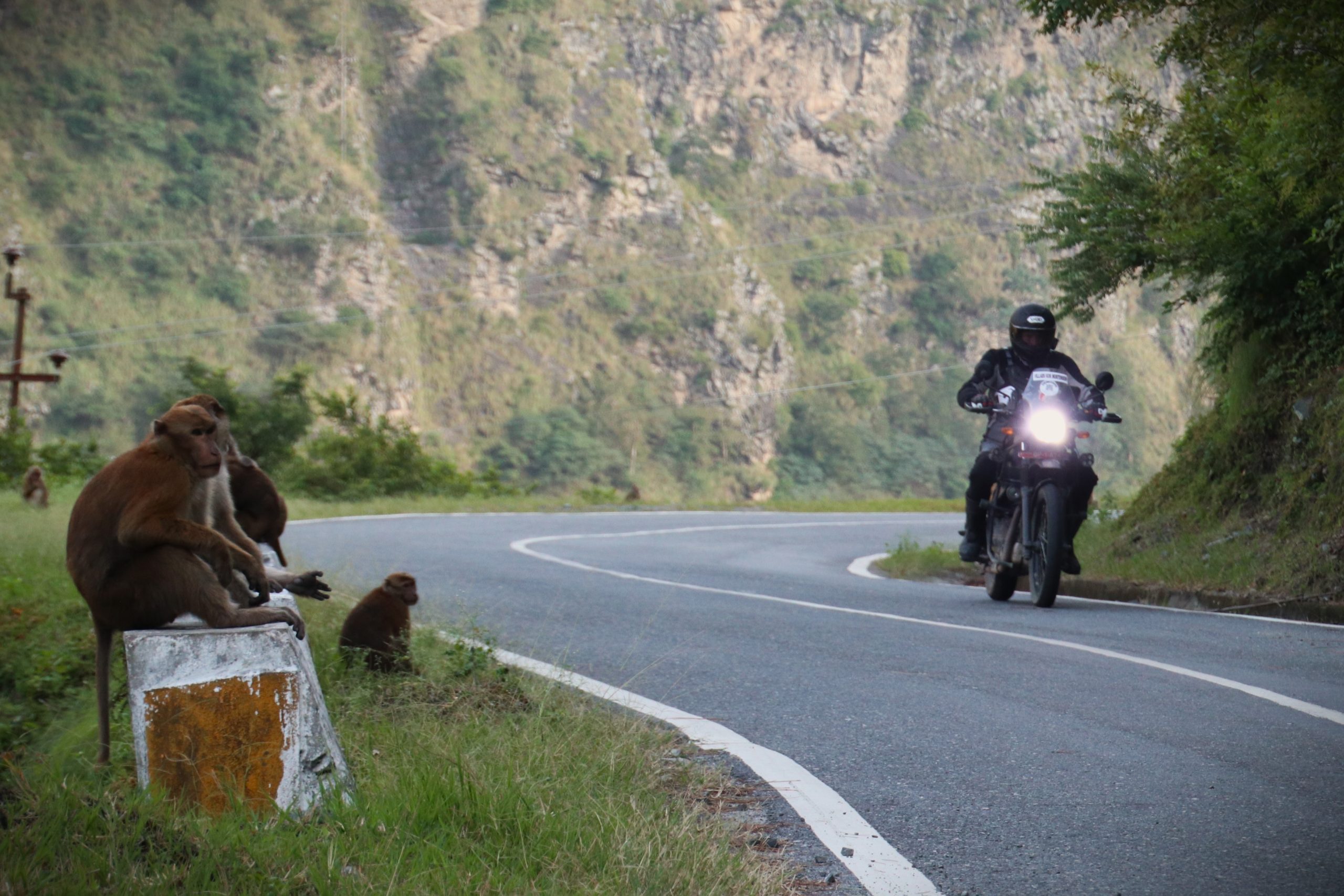
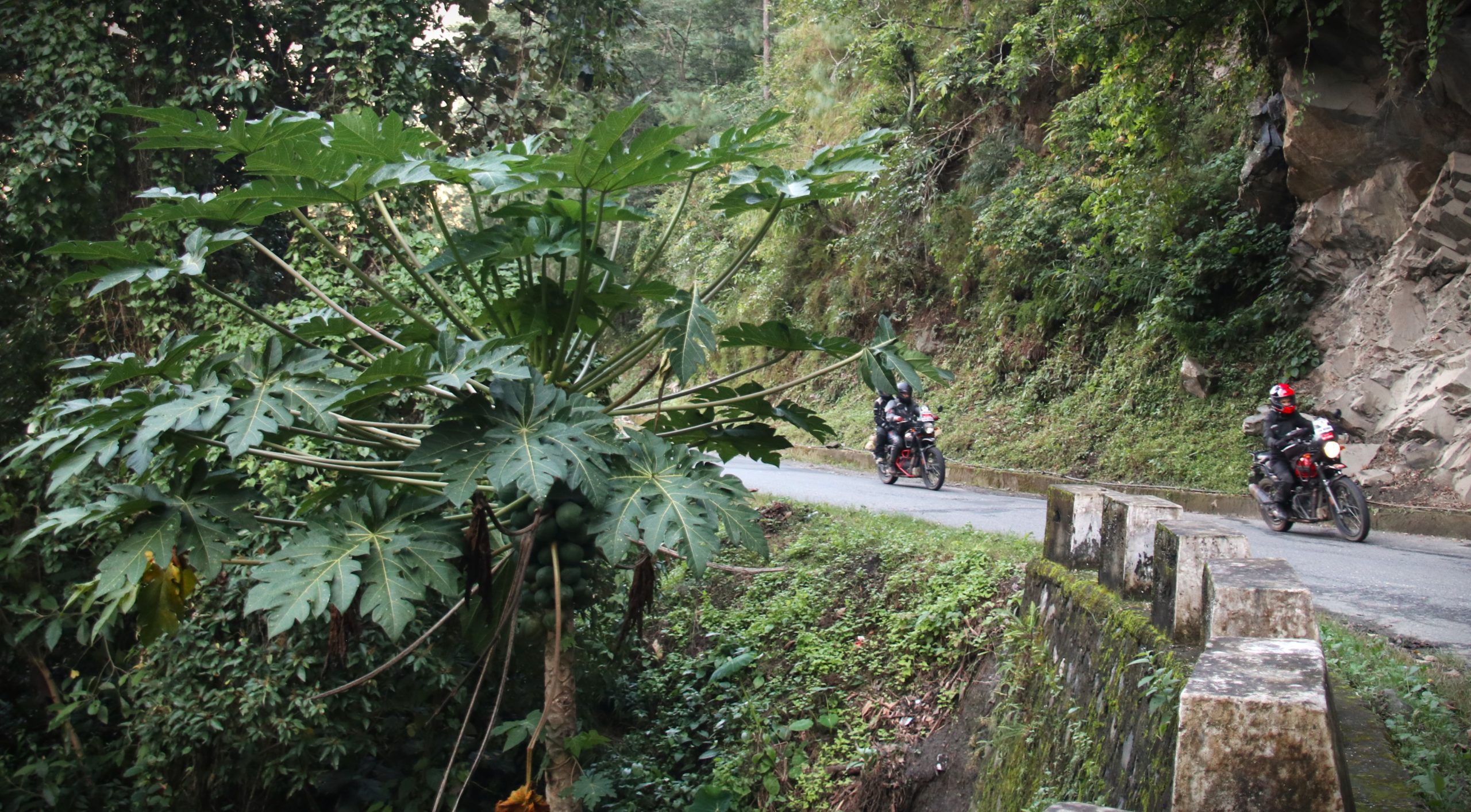
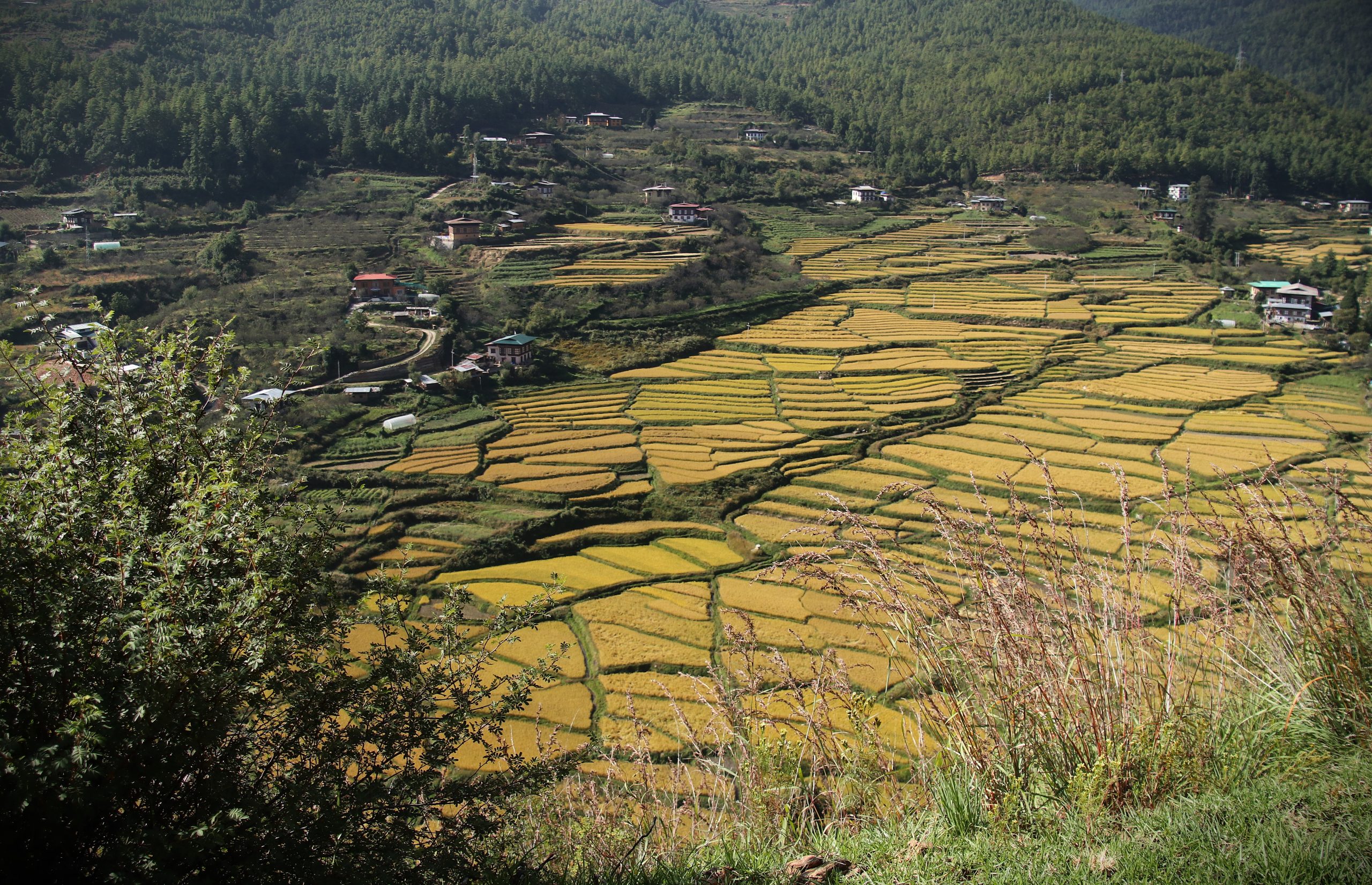
We turn the gas pedals. The road is narrow, the asphalt a little uneven. Every turn reveals new lush valleys, rushing waterfalls, and green mountain slopes.
Land of the Stormbringer
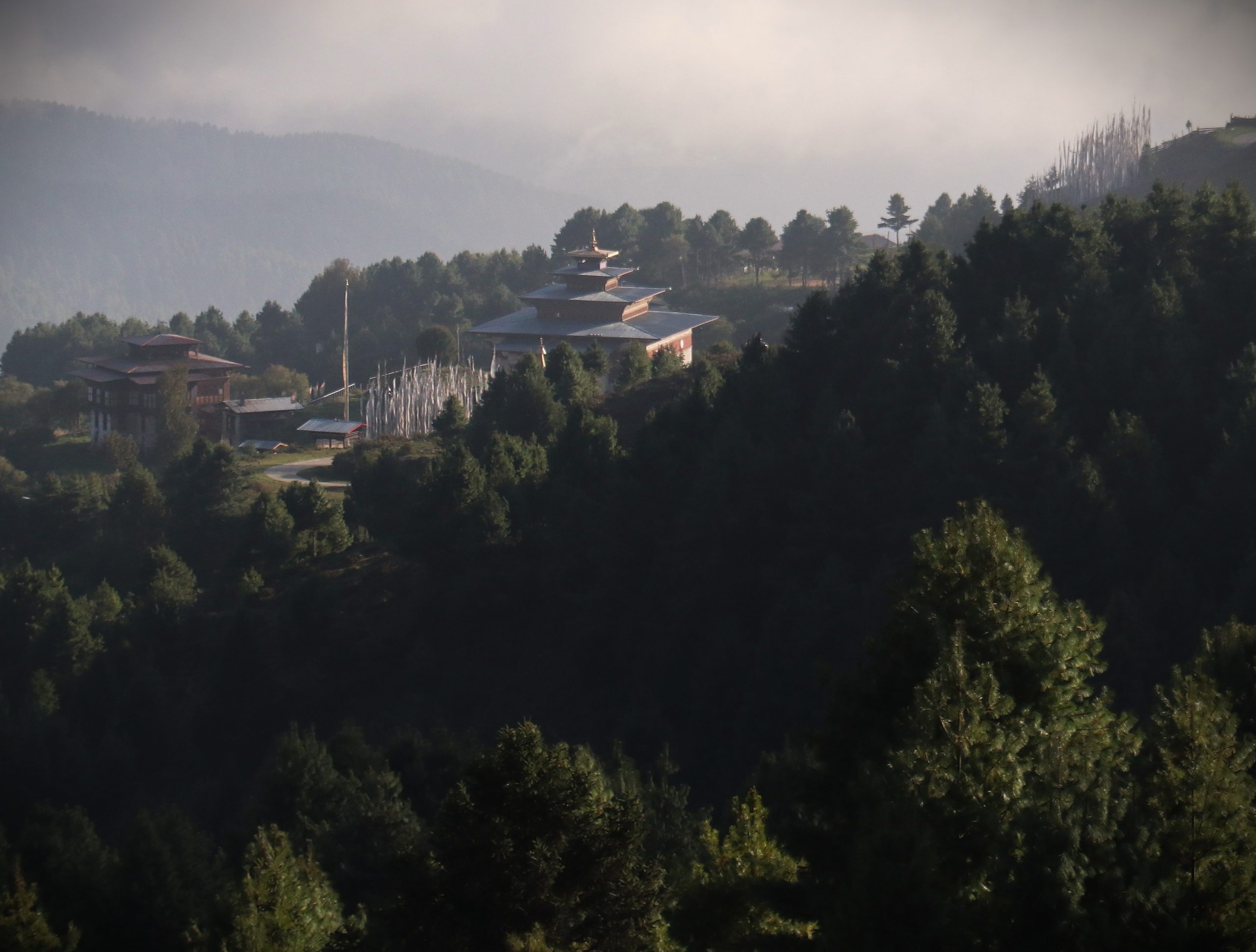
Bhutan is called Press Yul – The Land of the Thunder Dragon. And that makes sense. The clouds roll low between the mountains, and when the wind takes hold, it feels like a breath from the earliest times. In these almost uninhabited mountains, the imagination can take root and grow wild. As much as 65 percent of Bhutan is covered by forests and jungles.
In the Land of the Stormbringer, wealth is measured not in money but in happiness—in gross national happiness. That sounds like a cliché, but on a motorcycle through Bhutan it suddenly makes sense. No one is in a hurry. No one is being chased. You stop, and you only continue on when the road is cleared of fallen boulders.
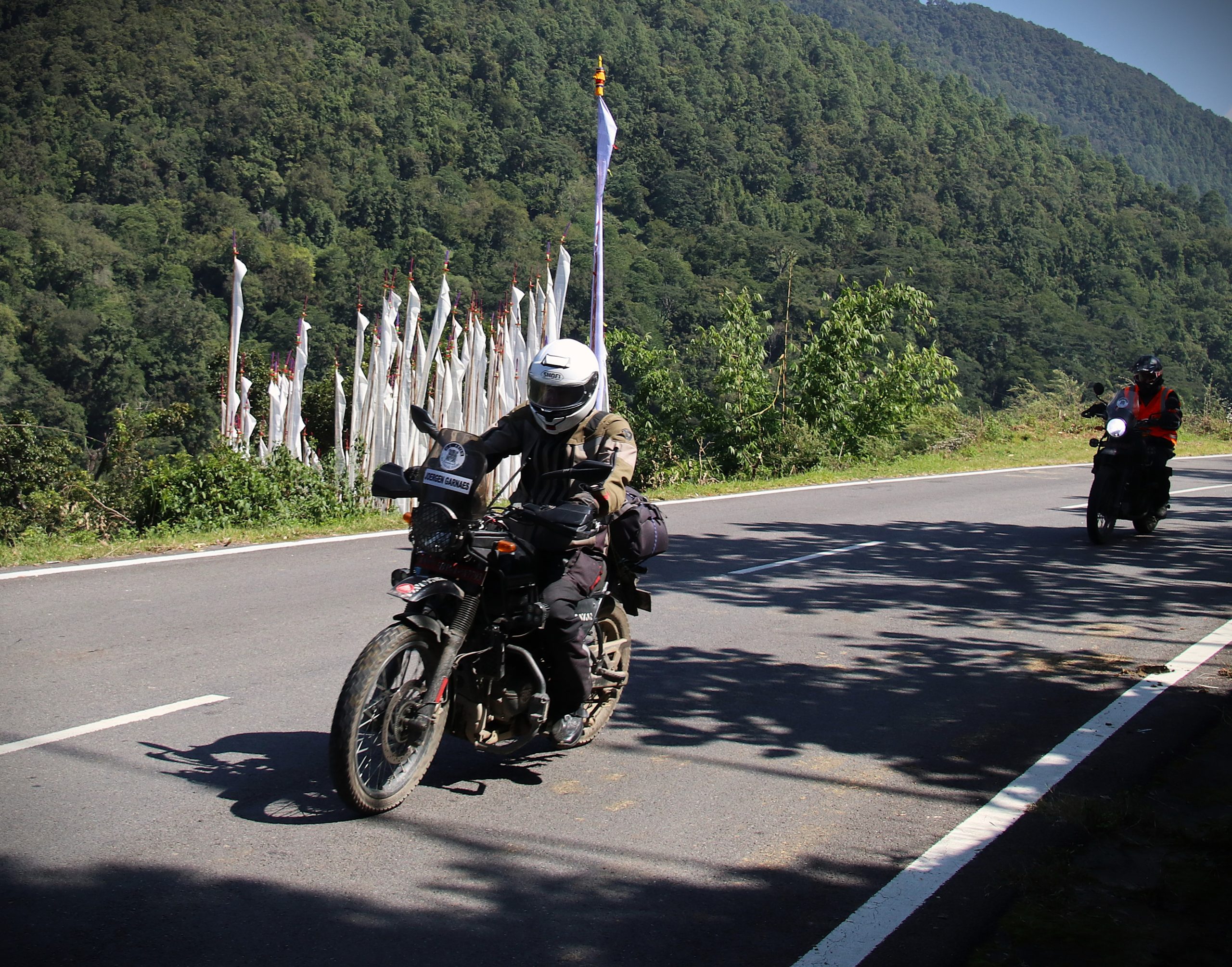
We drive along the country’s winding mountain roads. The concentration is total. One wrong gear selection, one moment of inattention… when the rear wheel slips out, one is reminded that fate always has the final say here in the Himalayas. The air is cool and thin, and the engines work hard as we climb higher and higher.
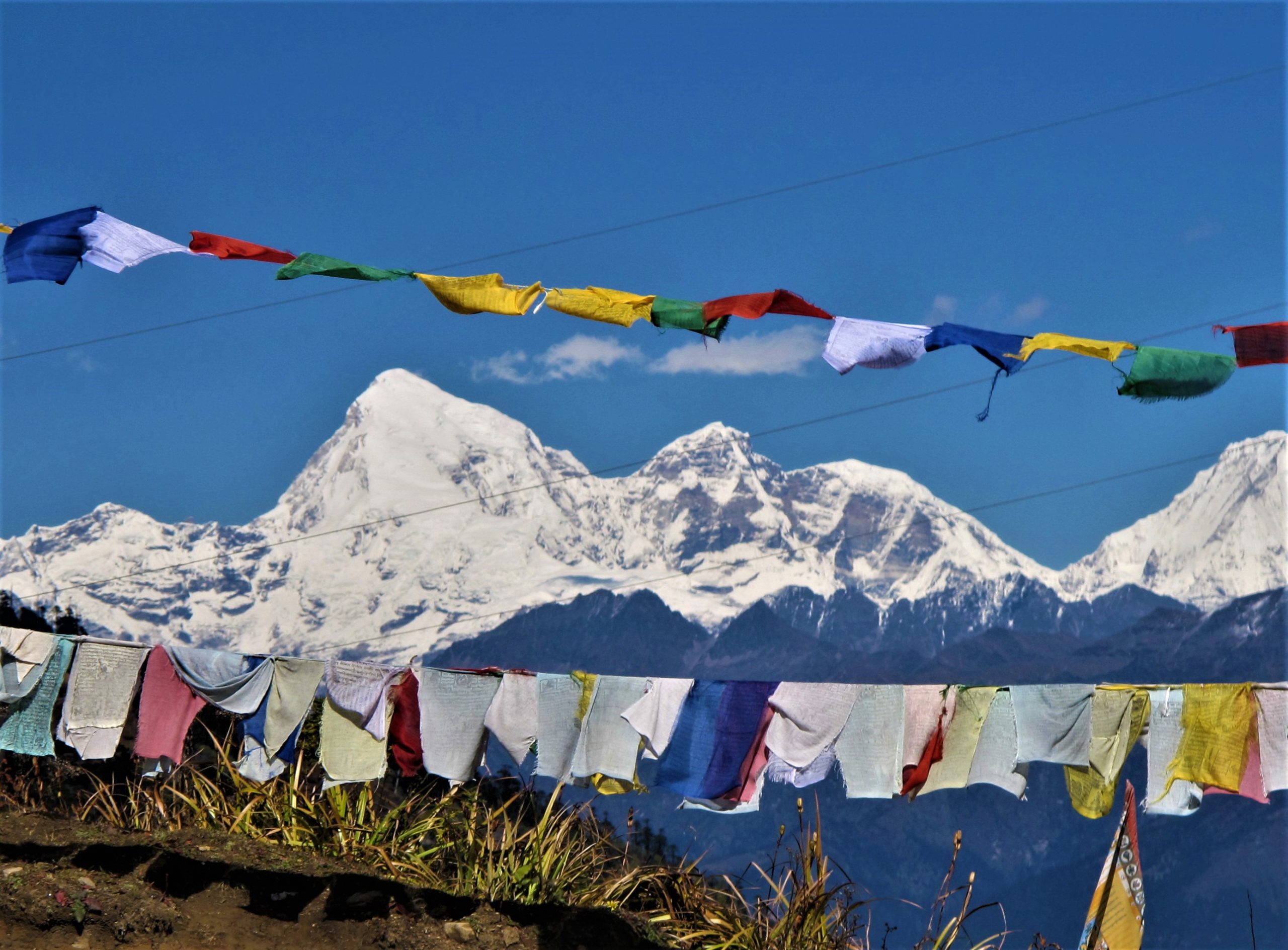
At the Chele La pass, at an altitude of 3,988 meters, we turn off the engines and lower the support legs. The roar of the engines is replaced by the whisper of the wind. And by silence. Jomolhari’s 7,326-meter-high glacier-covered peak rises up into the horizon. It is Bhutan’s third-highest mountain, a sacred mountain believed to be the home of the protective goddess, Jomo.
Magic and dark humor
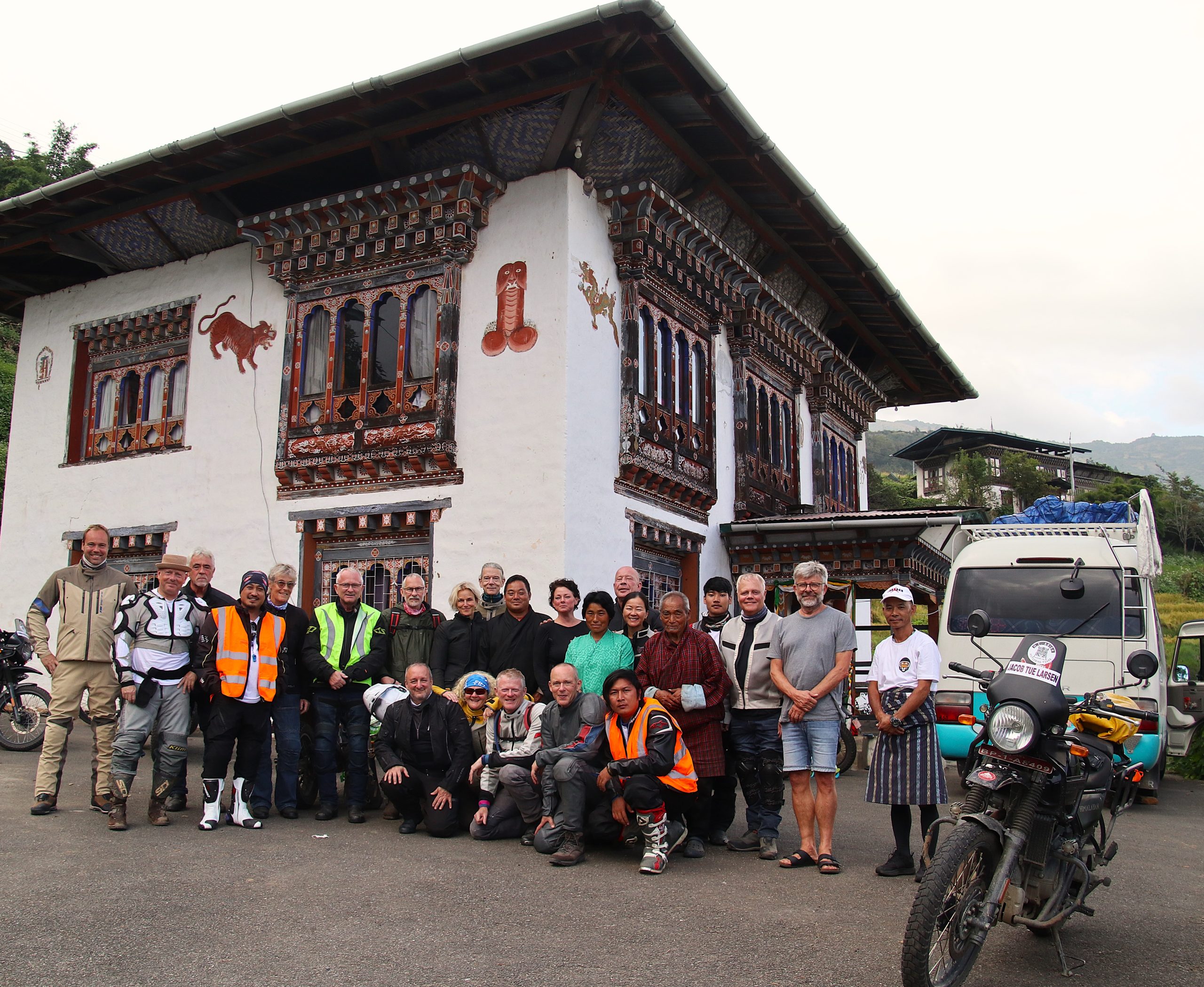
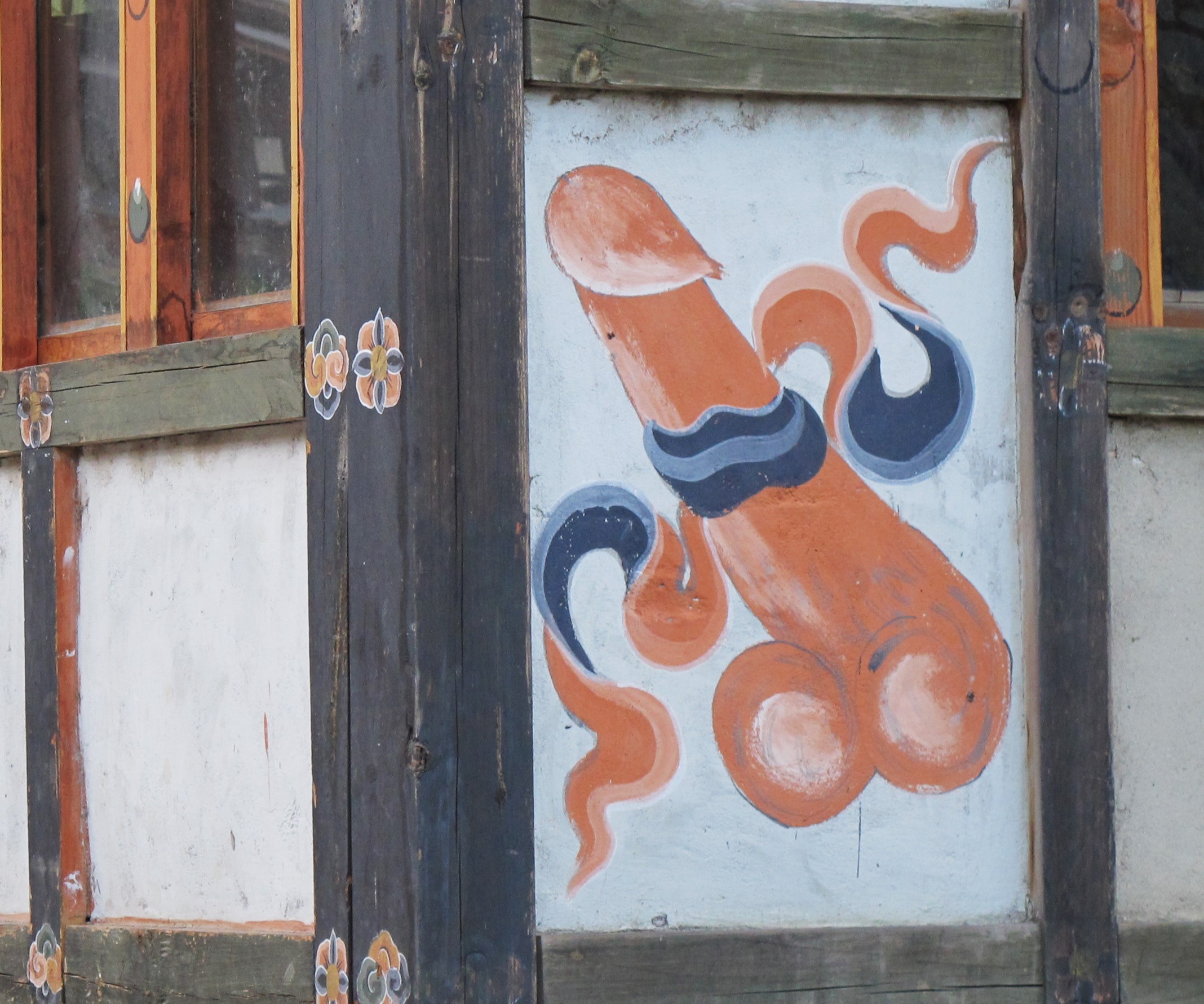
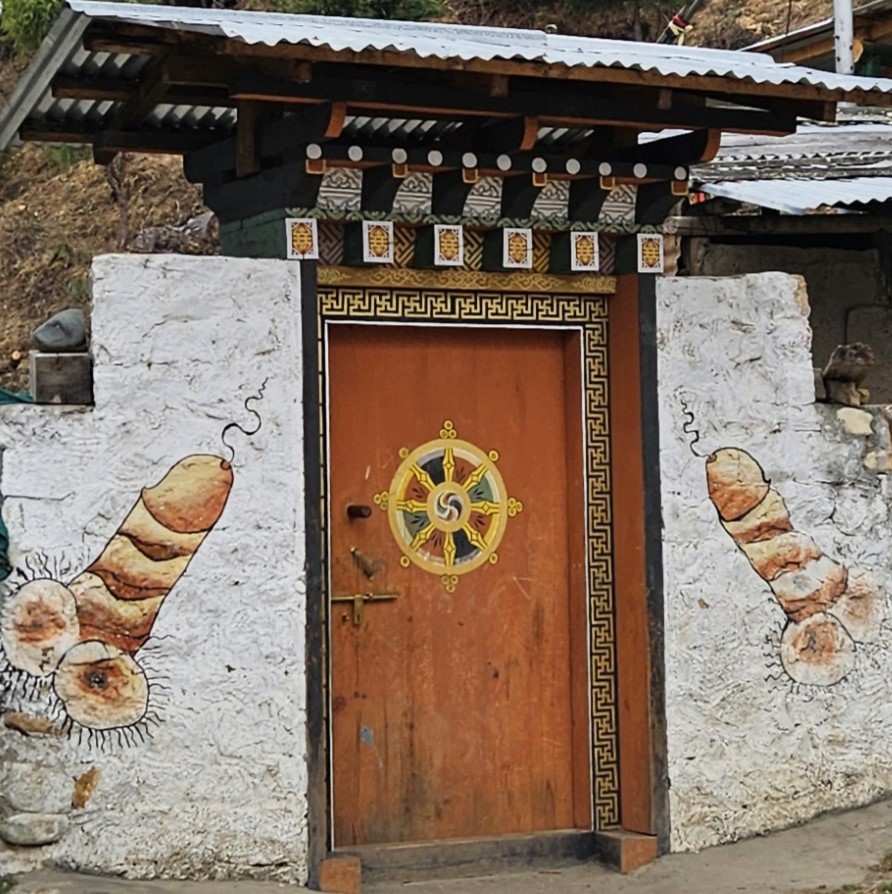
We stop in a small traditional village. The houses have whitewashed walls and roofs of black slate. A house facade is decorated with … colorful lanterns of all sizes. Do we see correctly? They hang above the doors and, if you wish: ”decorate” the walls.
“In Bhutan, these phallus symbols are auspicious symbols,” says Sonam Dorji, our Bhutanese motorcycle guide. “They protect against evil spirits and bring fertility and good luck.” I have to look like a big question mark. Sonam smiles and explains patiently.
The story takes us back to the past and the Divine Madman, Drukpa Kunley, A Buddhist monk who preached the seriousness and wisdom of the Buddha with humor, alcohol, and sexual symbols. “It’s both funny and deeply serious at the same time. Exactly like Bhutan itself,” laughs Sonam.
The next stop is the famous fertility stamp, Chimi Lhakhang. Here, many childless couples come to be blessed. One of the rituals against infertility involves the woman being tied to a heavy, auspicious wooden phallus on her back and walking around the temple with it. Yes, it really is quite good!
We see the large phallus sculpture that stands on the floor near an altar. In the temple we are shown a photo album with pictures of the many couples and babies that have been born after being blessed here. So maybe it might work?
The man who came flying on the back of a tiger
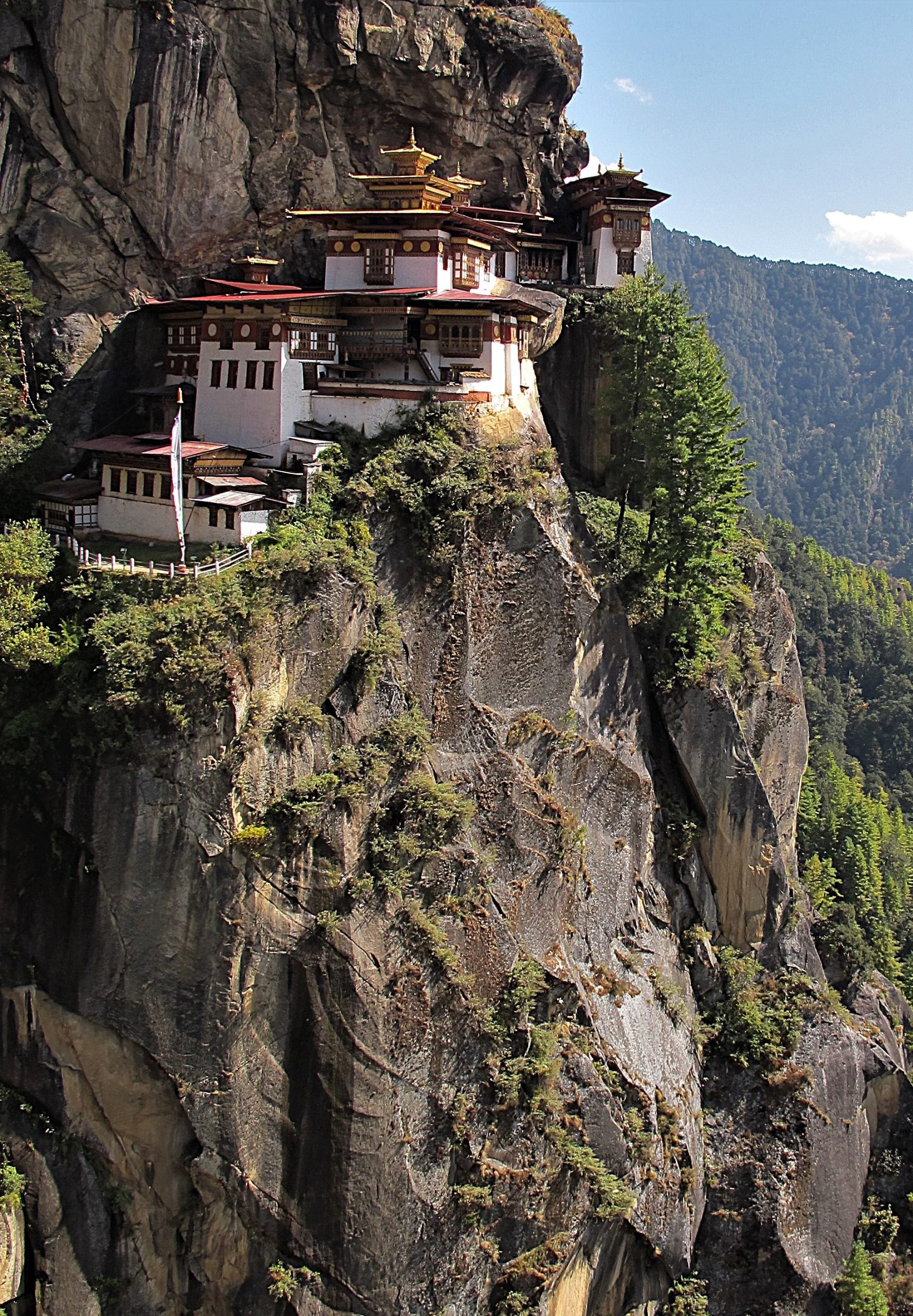
The absolute highlight of the journey hangs on a vertical cliff wall: Tiger's Speech, Taktsang Monastery. A small temple that seems to float 1,000 meters above the valley floor and 3,120 meters above the sea surface.
According to legend, Guru Rinpoche arrived flying on the back of a tiger in the 8th century. Guru Rinpoche was an Indian Buddhist master who played a crucial role in the introduction of Buddhism to Bhutan. Being able to fly on a tiger is a symbol of the ability to control powerful forces.
The temple was built in honor of this guru, who according to legend sat here in such deep meditation that the demons and spirits living in the mountains had to submit to him. They went from being aggressive and threatening forces of nature to serving the peaceful Buddhist religion.
We have parked the motorcycles and continue the final stretch up to Tiger's Ridge on foot. The climb is hard, the muscles in our legs tire, and our pulse races. When the temple finally appears clinging to the cliff, we become completely silent.
When the road is the goal
A motorcycle journey through Bhutan is not about reaching a goal, but about the movement. About the rhythm between the throttle and gear changes as you glide through the landscapes.
Bhutan is a country that doesn’t let you rush through it. It has to be experienced slowly – preferably from the saddle of a motorcycle and with plenty of time to stop, turn off the engine and listen to the silence as the flags flutter and the Land of the Thunder Dragon quietly roars around you.
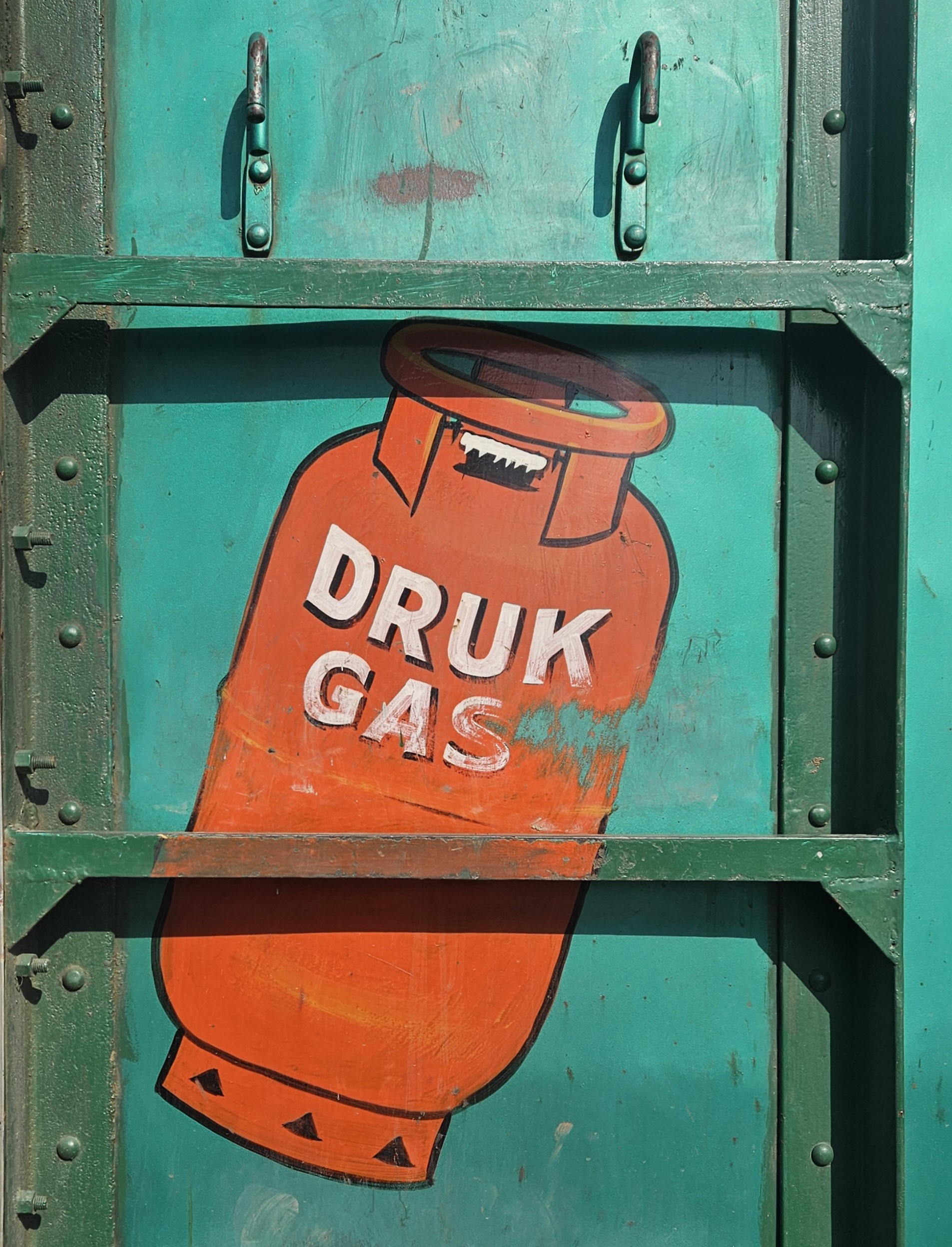
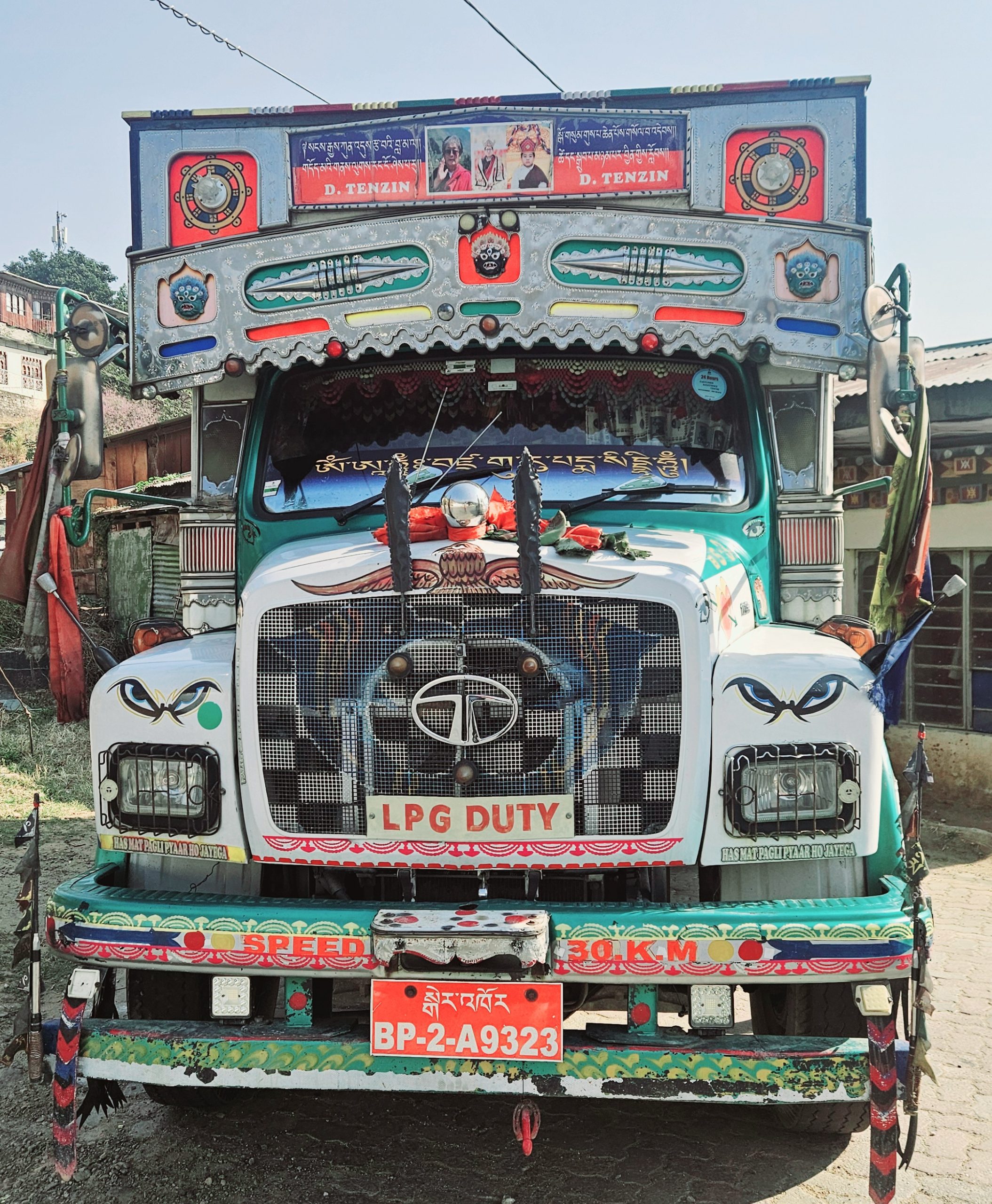
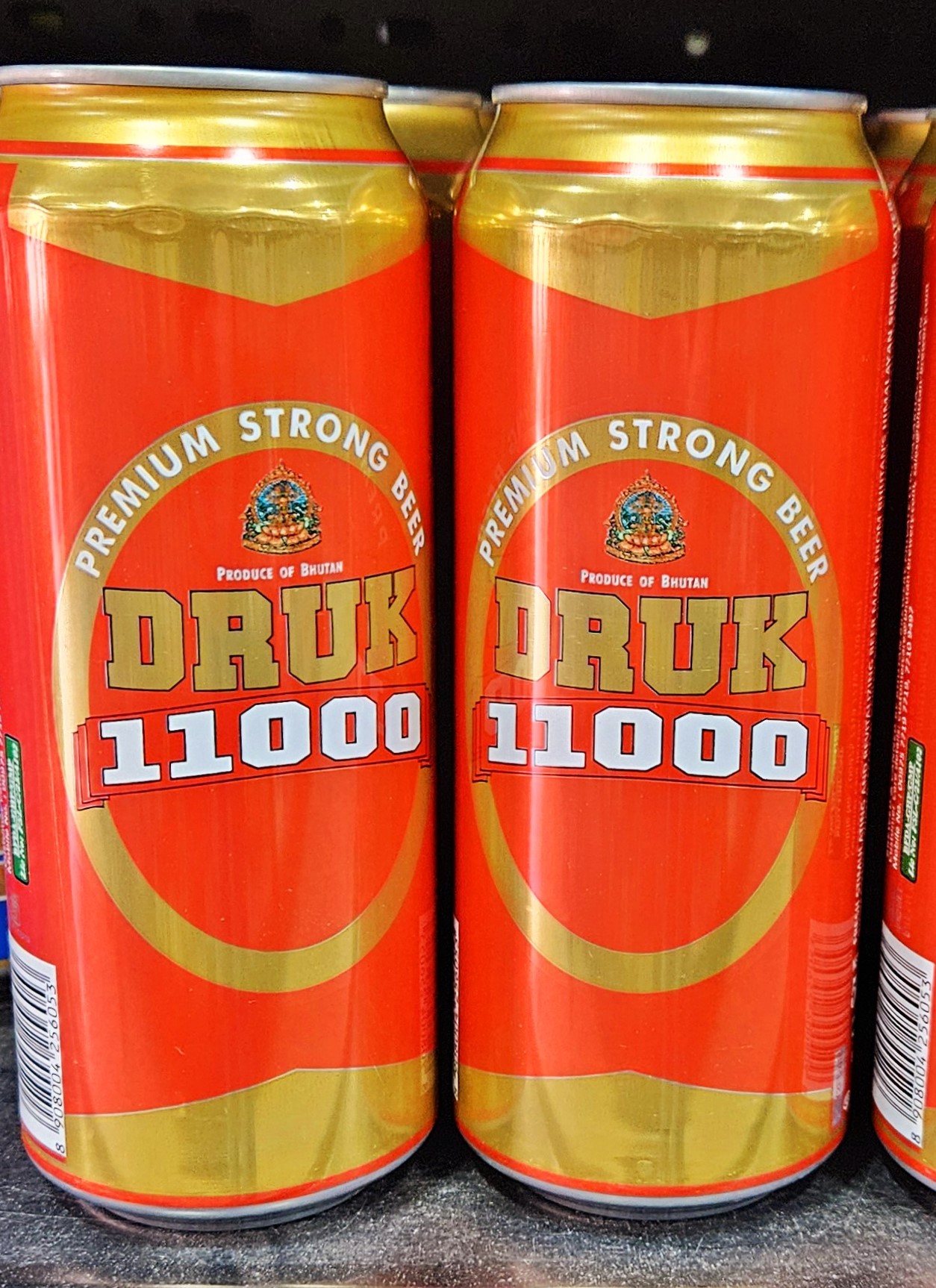
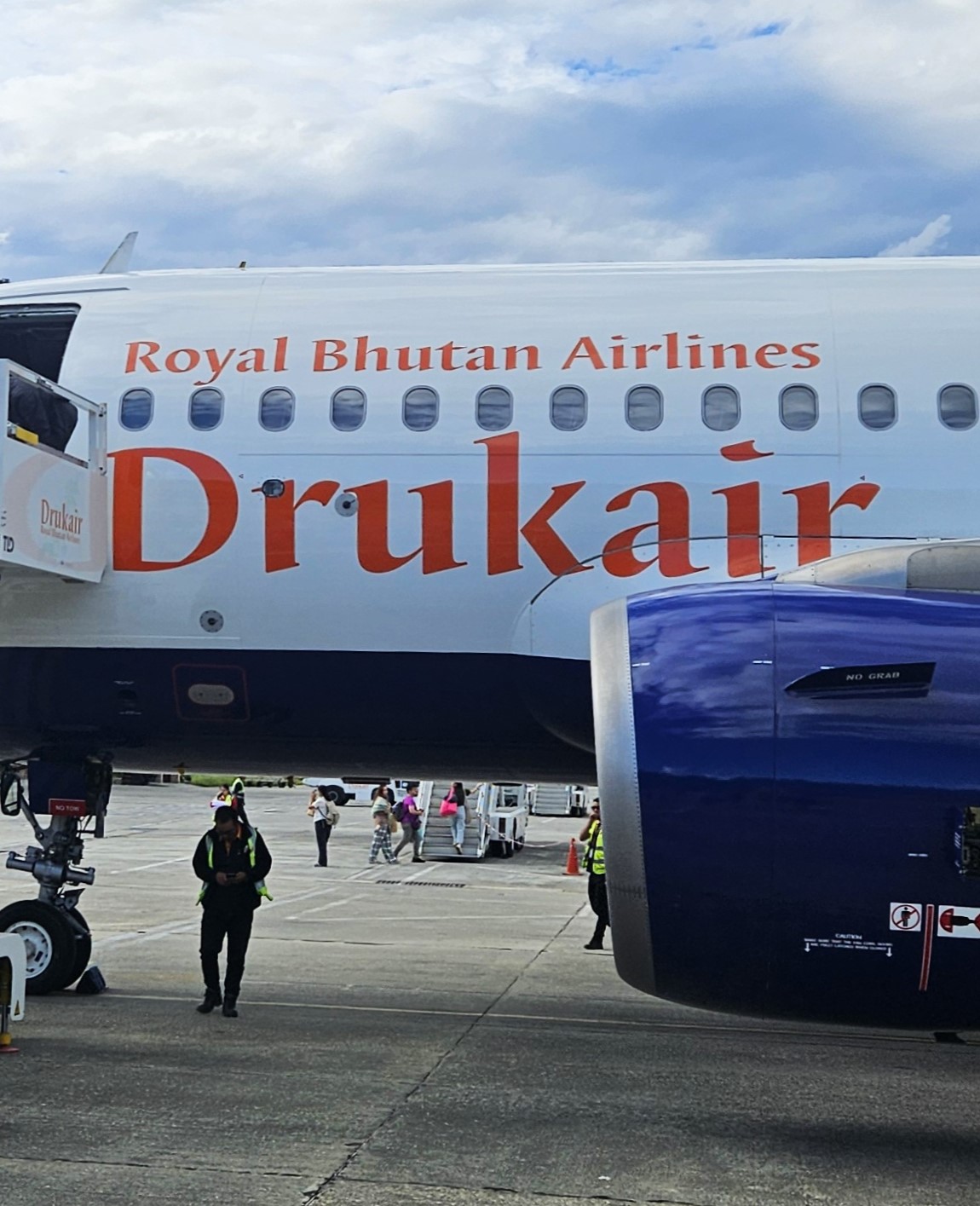
We acknowledge this as we leave Bhutan with Druk Air – as the airline, funnily enough, is called – not on the back of a tiger.
FACTSHEET – MOTORCYCLE EXPEDITION IN BHUTAN
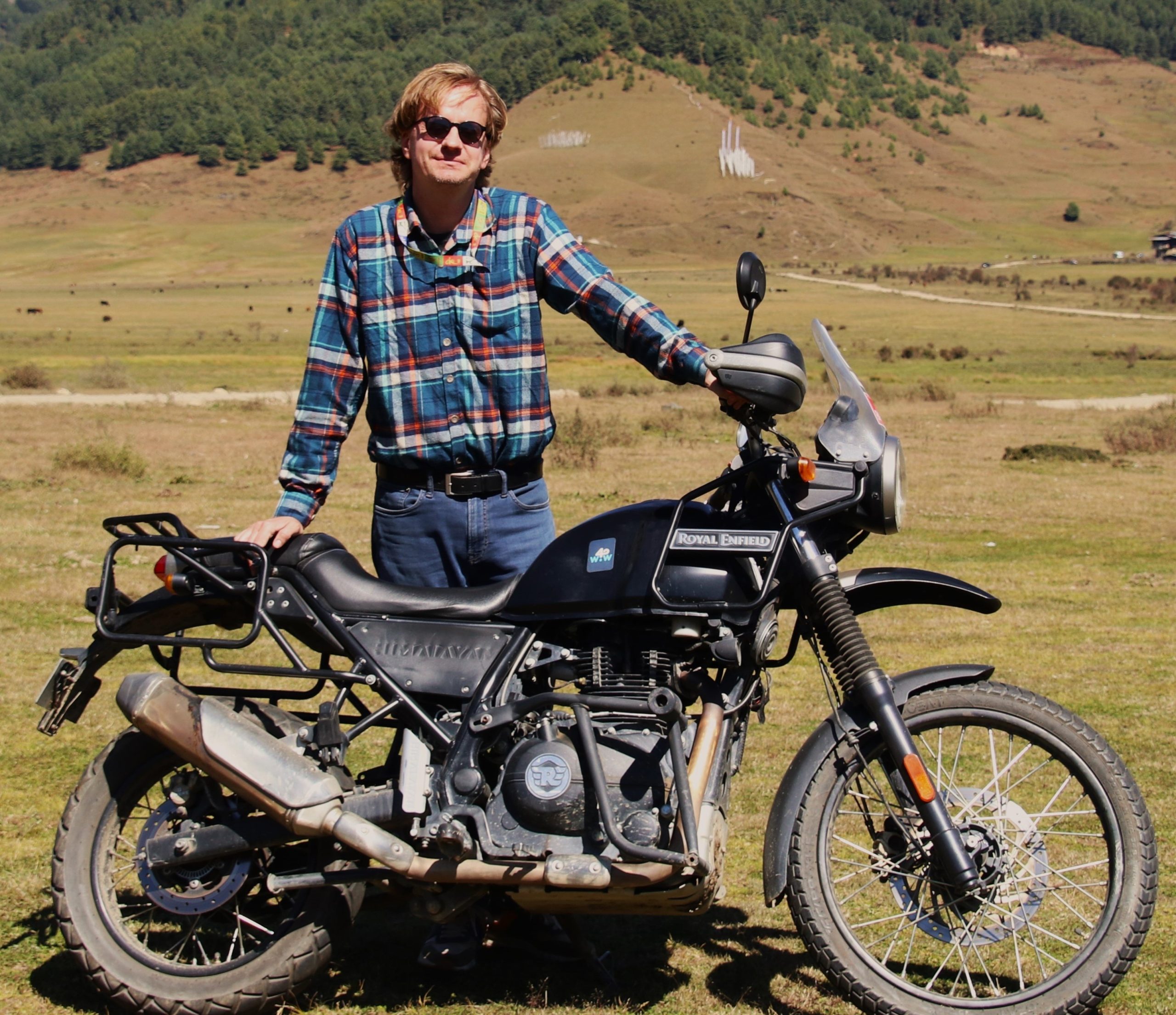
The motorcycles we rode on:
- Royal Enfield Himalayan 411 Cubic
Not the biggest motorcycle, but perfect for Bhutan's winding roads.
Travel organizer:
- Danish travel company: MC ASIEN ApS.
- The trip was a package tour including international flights, food, accommodation, motorcycle rental, petrol, meals, a Danish and local motorcycle guide, a companion for the luggage, a co-traveling mechanic, a visa for Bhutan – and much more.
- The next motorcycle tour through Bhutan will take place in 2027. Members of the MC Touring Club will receive 1,000 kr in discount by providing their membership number when registering. See more at mcasien.com
Practical information about the country, Bhutan:
- That is It is safe to travel in Bhutan, and it is good Infrastructure, considering that the country is a developing country, and good hotels with tourist standards in the cities of Thimpu and Paro. Outside the cities, the accommodations are more basic, but the magnificent natural experiences more than make up for it.
- Size: Bhutan is slightly smaller than Switzerland.
- Population: Bhutan has about 790,000 inhabitants.
- Forest cover: About 65–70 % of the country is covered by forests and jungles.
- In Bhutan, the government uses not only GDP but also Gross national happiness (Gross National Happiness, GNH). It measures a country’s development based on the well-being and quality of life of its citizens, and therefore not just economic growth. GNH is based, among other things, on mental and physical well-being, health and education, the environment and nature, culture, and good governance. The idea is that economic development only makes sense if it makes people happy.
- Bhutan is called “Land of the Stormbringer” (in Dzongkha, which is the official language of Bhutan). The dragon symbolizes strength and protection of the country, a spiritual power linked to Buddhism as well as to the nation’s identity and sovereignty. In Asian legends and myths, dragons are positive and protective beings. They symbolize wisdom and are associated with the forces of nature – especially rain, thunder, and mountains. Dragons are often seen as guardians of land, temples, and people.



 English
 Danish